
The first time I encountered different scenarios in financial modeling, I was somewhat bewildered. I wasn’t creating the model; the buyer of a division for a company I worked for did the work. But I got to observe.
This was no small model. The combination of the buyer’s business and our bolt-on led to a successful IPO a few months after the acquisition. I never asked if the scenarios played a role. Did the best case happen? Or was it the base case or the worst case? Also, what did those terms even mean? Were those arbitrary assumptions, or were there stories packed behind each case?
I’m probably showing my hand that I only use scenarios judiciously in my model building. And when I do, the norm is two scenarios, not three or more. But I have the advantage of continually stress-testing underlying drivers in my models, which generally eliminates the need for standard base-best-worst case scenarios found in many models.
Despite my limited use of scenarios, I found a Quantrix video by Lyndsey and Brendan to be creative and smart on the topic of scenario management. I thought, “Let’s try that.” This is not a how-to discussion and far from being an explainer video. It’s more about getting inspired by what you can do in your model building when scenarios are required.
In the first video, I mentioned the S&OP mindset along with focus forecasting. I’ve included a conversation with the person I consider the dean of S&OP. While not directly applicable to scenario management, there is a strong overlap.
Modeling Tip:
In the video, you might have noticed that 2025 was hard-coded in some of the formulas. That’s not a good modeling technique, because what happens as the model rolls forward to future years? When I make these videos, I’m focused on one key idea — scenario management, in this case.
In your use case, should you replicate this concept, it’s not that difficult to make your years dynamic, thereby bypassing the need to hardcode years in your model.
Conceptual Tip:
In the video example, I labeled my scenarios as Low, Probable, and Expected. I explained in Part 1 that each scenario should be associated with a story. However, consider a starting point that is 80 to 99 percent realizable. After that, what scenarios could impact the top and bottom lines? Start with specifics such as these:
- A top vendor will release a new product six months earlier than expected.
- Ramping up offshore purchases in advance of tariff and duty increases.
- Price drops for three of the lowest-performing but moderate-volume SKUs.
For model-building purposes, you can name these A, B, and C, and then mix and match the different combinations to see what operating cash flow looks like and the impact on your organization’s financial health.
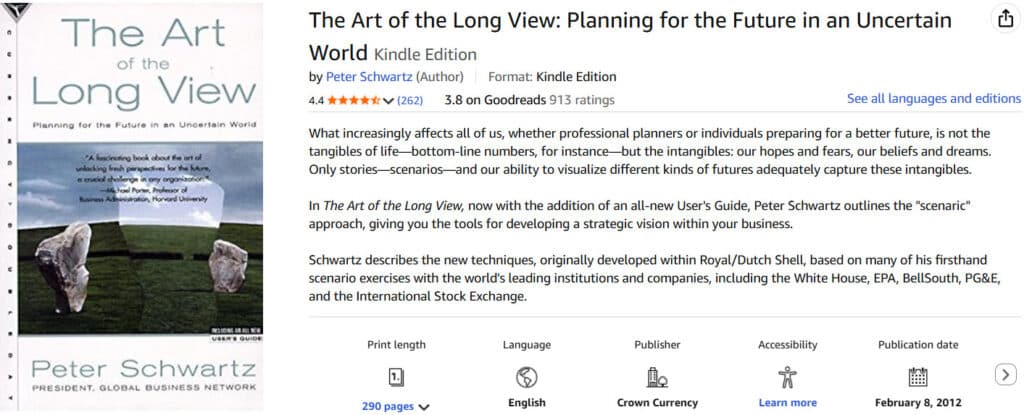
This concept loosely follows the ideas in The Art of the Long View: Planning for the Future in an Uncertain World by Peter Schwartz.